
Step 5 of 8 · Crimp
How to crimp hydraulic hose
Select the die set and crimp diameter from the specification, crimp, then measure the crimp diameter before the hose leaves the machine.
What this step does
Crimping compresses the fitting shell onto the hose with a ring of die segments that close radially. The result is defined by one number: the crimp diameter, measured across the shell after crimping.
The crimp diameter is not chosen by feel. It comes from the crimp specification for the exact hose and fitting combination, which also names the die set to use. Too large a diameter and the fitting can blow off; too small and the inner tube is crushed, the insert collapses and the hose fails at the fitting.
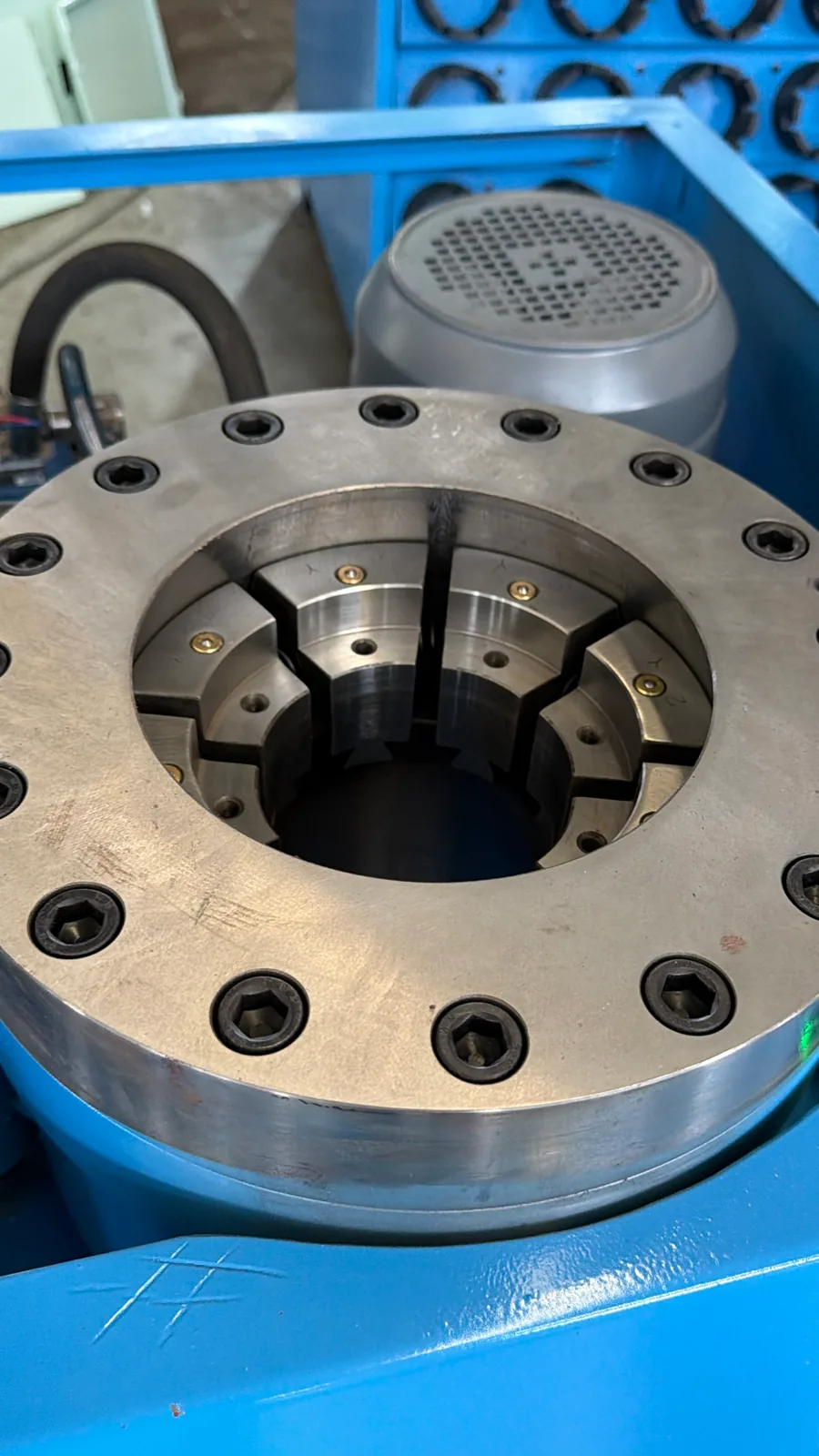
How to do it
- Look up the crimp specification for the hose type, hose size and fitting series. Note the die set and the crimp diameter with its tolerance.
- Install the specified die set. Check the dies are clean and the segments are a matched set.
- Set the machine to the target crimp diameter using its scale, micrometer stop or digital control.
- Place the assembly in the head so the shell sits within the die length at the position the specification shows. Check the depth mark is still at the edge of the shell.
- Close the dies. Hold the hose straight and supported so it does not pull the fitting off-centre.
- Open the dies and remove the assembly.
- Measure the crimp diameter with calipers or a crimp micrometer across the flat of the crimp, between the die ridges, halfway along the shell. Measure at several points around it.
- If the diameter is above tolerance, adjust the setting and follow the manufacturer rule on re-crimping. If it is below tolerance, scrap the assembly.
Checks before moving on
- Measured crimp diameter is within the specified tolerance at every point measured.
- The crimp is even along the shell, with no taper beyond what the specification allows.
- The depth mark has not moved away from the shell.
- The first assembly of every batch and every setup change is measured and recorded.
Common mistakes
- Using a crimp diameter from a different hose or fitting brand.
- Measuring on the ridges left between die segments instead of on the flats.
- Trusting the machine setting without measuring the first piece. Dies wear and settings drift.
- Crimping with dirty or mixed die segments, which gives an uneven crimp.
Equipment and consumables
- Hose crimping machine with capacity for the largest hose and fitting you make
- Die sets covering your range of crimp diameters
- Calipers or crimp micrometer
- Crimp specification charts for every hose-and-fitting combination you assemble
Settings such as crimp diameter, skive length, insertion depth and test pressure are specific to the hose and fitting manufacturer. Use their current specification.
Frequently asked questions
What is crimp diameter?
Crimp diameter is the outside diameter of the fitting shell after crimping. It is the controlled dimension of a crimp and is specified, with a tolerance, for each hose and fitting combination.
How do I know which die set to use?
The crimp specification lists the die set for each hose size and fitting series. A die set covers a limited range of finished diameters; using one outside its range gives an out-of-round crimp.
How do I measure a crimp?
Measure across the flats of the crimp, between the ridges left by the die segments, about halfway along the shell, at several points around the circumference. Compare the result with the specified crimp diameter and tolerance.
What happens if a hose is over-crimped or under-crimped?
Under-crimped means the diameter is too large: the fitting does not grip enough and can leak or blow off. Over-crimped means the diameter is too small: the inner tube and reinforcement are damaged and the bore is restricted. Both are rejected.